The Case for Mismatched China
When we picture vintage china, many of us think of a matched set. Twelve of everything in one pattern, kept in a cabinet and brought out for holidays. It’s beautiful and harmonious. And let’s be honest, some patterns are meant to be seen in numbers.
But, there's also another path. A mismatched set, built one piece at a time, where the pieces come from different manufacturers and different eras but somehow belong together. That's the one I want to write about today, because it's less familiar and can be tough to get right.
What a mismatched set actually is
A mismatched set is not an accumulation. It isn't stray pieces inherited over the years that you're not quite sure what to do with. Or miscellaneous pieces that happen to share a shelf. Those collections are great, but they're not intentional.
A mismatched set is a small collection, assembled with intent, piece-by-piece. Every item was chosen because it belongs alongside the others. It might look something like...
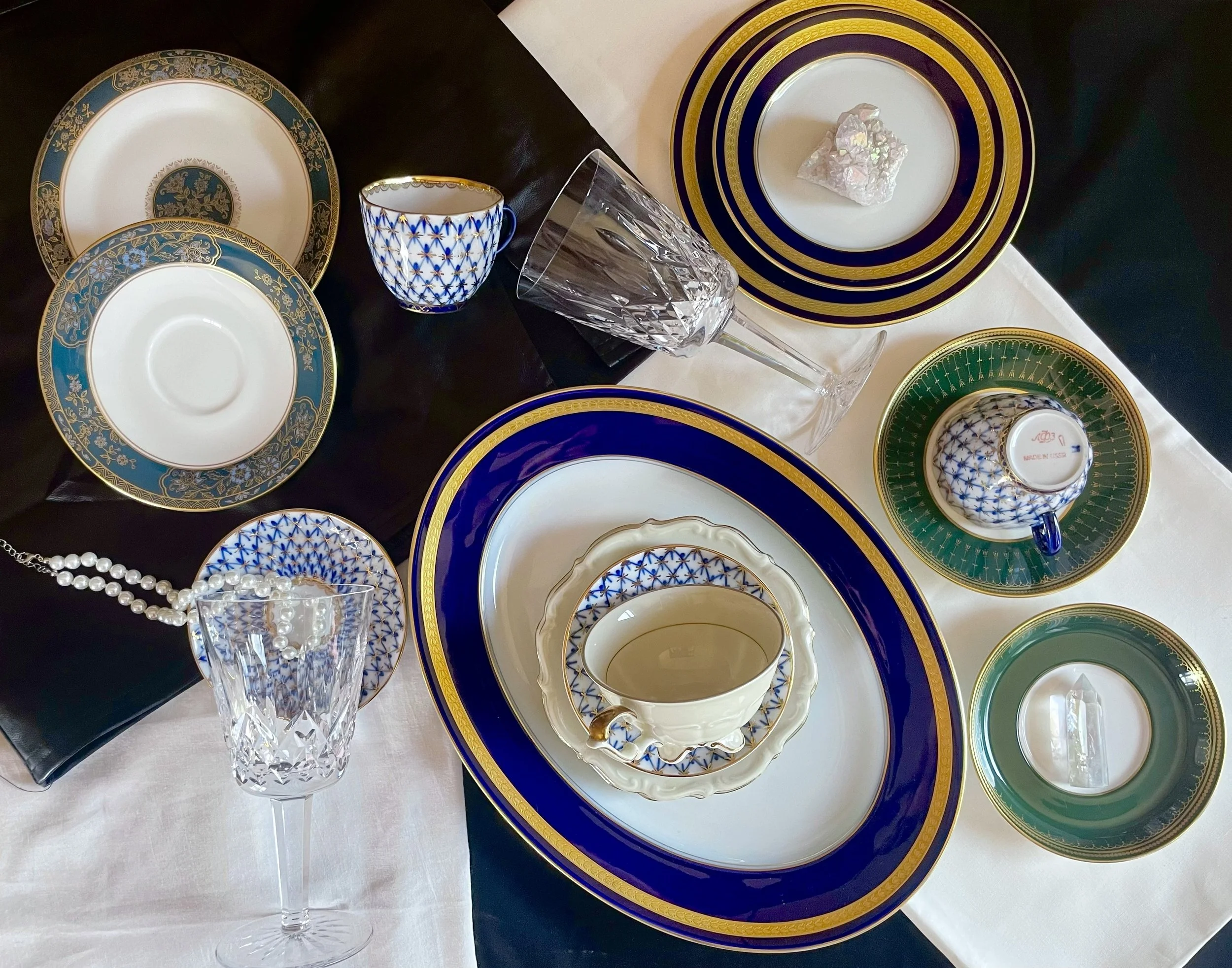
Six dinner plates in the same pattern, the anchor of the collection. Salad plates from two or three coordinating patterns. Bread plates that pull a color from the salads. Teacups and saucers from four or five different sources. A serving platter that ties them all together.
The overall impression reads as considered and personal, like the person who set the table thought about it. It's the layered, warm quality people mean when they talk about grandmillennial style, or English cottage rooms, or the tables in Cabana magazine.
Why build a mismatched set?
The practical answer is that a mismatched set is often easier to assemble than a full matched service, especially if you're starting from scratch. You don't need to hunt down twelve identical salad plates. You need to find pieces you love, one at a time, and know how they'll play with the others.
The other answer is that a mismatched set fits the way most of us gather now: small dinners on Tuesday, bigger tables on Saturday, gatherings and quiet moments where the pieces get to be seen and used. A collected set stretches and shrinks with the moment.
Three principles that make it work
The trick to a mismatched set that reads as intentional, and not thrifted-in-a-hurry, is finding at least one connection between the pieces. Any single connection is enough to hold a set together.
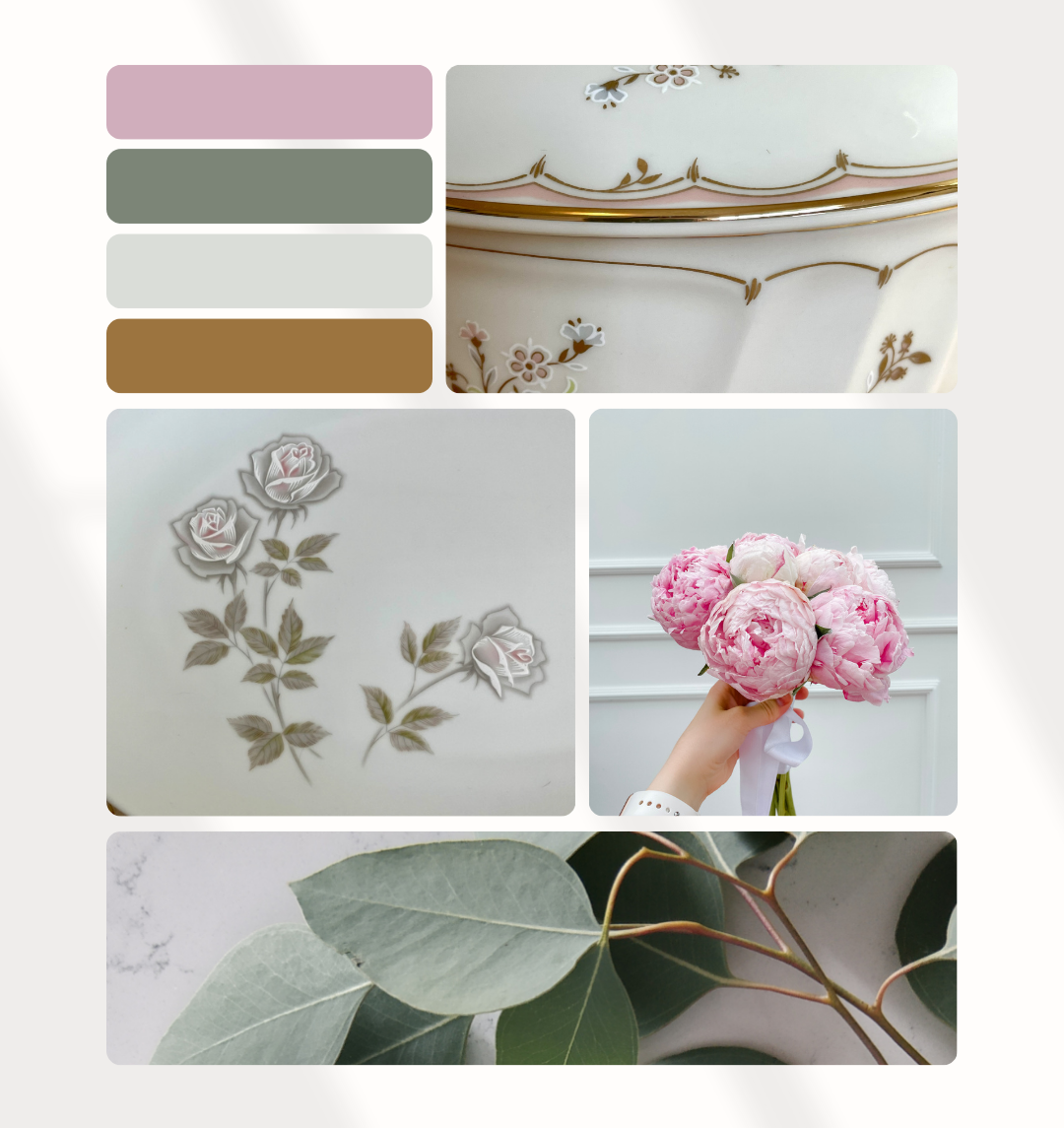
1. A shared color story
The most forgiving way to build a mismatched set is around a palette. Three or four colors that you love and want to keep coming back to, carried through every piece you add.
Pinks, greens, and gold. That's the palette I keep returning to. It lets me buy a Wedgwood plate with soft green florals, then find a Mikasa teacup with pink roses at a different estate sale months later, and know they'll live together on the same table.
The palette doesn't have to be narrow. Ivory, blush, sage, and warm brass work beautifully together. So does cobalt, gold, and white. So does blue and white in every variation, from Delft to Blue Willow to modern transferware.
The pieces don't need to share a pattern. They need to speak the same visual language.
2. A repeating design element
The second connection is a repeated detail: a rim style, a motif, an era.
If every plate has a scalloped edge, the pieces read as related even when the centers are wildly different. If every piece has a gold rim, the same is true. A single motif carried through pieces from completely different manufacturers becomes its own through-line. Roses. Wheat. Holly.
Era works too. Bone china from the mid-century (roughly 1940 to 1970) shares a general design sensibility across brands, because the pieces were made for the same kind of home. So does hand-painted porcelain from the pre-1917 antique period. Pieces made for the same era tend to look right together, even from different factories.
3. Deliberate scale variation
The third principle is about how pieces work together on the table, not on the shelf.
If every plate is the same size and shape, a mismatched set can feel busy. If the sizes vary, the eye reads the layering as intentional. A wide dinner plate underneath, a smaller salad on top, a bread plate, a footed teacup and saucer. The descending scale carries the eye through the setting even when the patterns don't literally match.
How to start, if you're building from scratch
Don't try to build the whole set at once. That's how people end up with a cabinet full of pieces they don't actually love.
Start with a workhorse. Choose your dinner plates first, six to eight in a single pattern, something you'd want to look at every day rather than something you're saving for company. This is the base.
Add salad plates deliberately. Two or three coordinating patterns, four to six of each. This is where the interest comes in without breaking the palette.
Let the small pieces come slowly. Teacups, bread plates, small bowls. Bring them home one at a time from estate sales, thrift shops, or vintage listings. Buy them because they speak to you, not because you need to complete a set. Over a year or two of casual sourcing, you'll have something that couldn't have been assembled any other way.
The process should feel more like collecting than shopping. Every piece carries a small story: where you found it, why you brought it home, whose table it came from before yours.
Why mismatched isn't a compromise
There's sometimes a sense that a mismatched set is a starter set, a placeholder until you can build the "real" version. It's not. It's a different way of collecting, with its own strengths.
A collected set gives you permission to stop when the collection feels done, to keep going when you find something wonderful, to swap pieces in and out as your taste evolves. It becomes a collection that grows with you, and that carries a record of when and where you were paying attention.
Every piece is a small yes.
A table set with pieces you've actually said yes to has its own kind of warmth. Not because it's more impressive than a matched service. Because it's more yours.
A note on using vintage china:
Not every vintage piece is meant to be eaten off of daily. Pieces made before 1990, and especially before 1971, can contain lead in the glaze or in the decorative rim paint. Lead leaches more with acidic foods, hot liquids, and repeated dishwasher use.
For daily eating, look for pieces made after 1990 or that have been lead-tested. For older pieces, treat them as styling and occasional-use pieces. They shine in a few other roles:
Display on a shelf, plate wall, or in a china cabinet.
Table styling for gatherings, where a vintage plate sits under a modern one as a charger.
Repurposed as ring dishes, catchalls, or candle holders.
This isn't a reason to avoid vintage china. It's a reason to know what you're buying and how you plan to live with it. Always do your research.
